Product Pages That Are Hard to Find
Missing information, unclear targeting and weak internal links can limit discovery. We improve priority product pages around relevant customer searches.

We improve product visibility, strengthen category pages and address technical issues to help your store attract relevant visitors and support organic sales.
10+Years of Experience
200+Brands Supported
4.9/5Google Rating
 5.0 rating
 4.9 rating
 4.9 rating
 5.0 rating
Your products may offer excellent value, but shoppers need to discover them before they can buy.

Missing information, unclear targeting and weak internal links can limit discovery. We improve priority product pages around relevant customer searches.
Category pages should help shoppers understand their options. We develop clearer structures and useful content around broader shopping needs.
Filters, sorting options and product variants can create complex URL patterns. We review how these pages are accessed, indexed and connected.
Slow pages and confusing navigation can interrupt shopping. We identify usability and performance issues that affect the customer journey.
More visitors do not always mean more purchases. We review search intent, landing pages and tracked shopping behaviour to identify opportunities.












Review your store’s technical setup, content, navigation and existing search performance. Receive a prioritised roadmap for improving important pages.
Understand how shoppers search for your products and categories. We map relevant keywords to the pages best suited to answer each search.
Improve category names, headings, descriptions and internal links. Help shoppers explore your range and find suitable products.
Strengthen product titles, descriptions, specifications and supporting information. Make each priority page more useful to customers and search engines.
Address issues involving crawlability, indexing, canonical tags, redirects, page performance and catalogue structure.
Create buying guides, comparisons, FAQs and usage resources that answer customer questions and connect them with relevant products.
Identify relevant publications, resources and outreach opportunities that support your brand’s credibility and online presence.
Configure or review agreed tracking for shopping actions, purchases and revenue. Use the findings to guide ongoing priorities.
Category pages connect broader searches with your product range. We improve their structure, content and links so customers can understand the available options.
Product pages should provide the details customers need before purchasing. We improve clarity around features, specifications, applications and common questions.
We prioritise pages based on search demand, availability, business value and the work required.
Review which filtered pages provide useful search value and how unnecessary URL combinations should be managed.
Plan the treatment of sizes, colours and other variants based on their content, search demand and platform behaviour.
Identify repeated pages and unclear URL relationships. Recommend suitable consolidation or differentiation where needed.
Help customers and search engines move through your catalogue through accessible links and logical navigation.
Review temporary stock changes and recommend a page approach that considers customer usefulness and expected availability.
Plan whether to retain, redirect or remove pages based on product relevance, alternatives and existing search value.
Support URL mapping, redirects and pre-launch checks when redesigning or changing platforms. Monitor the agreed areas after launch.
Improve collection and product pages while reviewing theme performance, internal links, URL relationships and structured data within Shopify’s capabilities.
Optimise your WordPress store’s categories, products and technical configuration. Review relevant themes, plugins and performance factors.
WooCommerce stores needing theme or CMS changes can draw on our WordPress development expertise.
Assess your store’s architecture and implementation requirements. Work with your development team on agreed changes to templates, navigation and tracking.
When catalogue or template changes require development, ecommerce development support can help implement the agreed store improvements.
Useful content can answer shopping questions before customers reach a product page.
Explain which features, specifications or options matter when choosing a product.
Help shoppers understand meaningful differences between suitable products.
Show customers how to use, maintain or get more value from their purchases.
Answer common questions about suitability, materials, compatibility and other buying considerations.
Plan relevant content for gifting occasions, seasonal needs and promotions.
Each resource should guide readers towards appropriate categories or products.
We learn about your customers, product range, priority categories and sales goals.
We assess technical issues, page quality, navigation, existing visibility and tracking.
We map relevant searches to pages and identify where improvements can offer the most business value.
We complete agreed optimisation activities and collaborate with your team on product accuracy, development and approvals.
We review performance, purchases and revenue data where available, then refine the next priorities.
 Manufacturers
 Industrial Equipment Suppliers
 Engineering Companies
 Software and SaaS Businesses
 Logistics and Supply Chain Providers
 Professional Service Firms
 Retail & E-Commerce
 Healthcare & Pharma
 Education
 Real Estate
 Apparel & Fashion
 Beauty & Wellness
 Food & Beverage
 Travel & Hospitality
 AI & Technology
 Consultancy & Recruitment
 Entertainment
 Franchise Businesses
 Security & Surveillance Technology
 Healthcare & Wellness
 Education
 Hospitality
We focus on categories and products that fit your demand, availability and growth priorities.
Our technical understanding helps turn recommendations into practical website improvements.
We plan content around the information shoppers need to compare and choose.
We work with your product and marketing teams to maintain accuracy and coordinate changes.
You know what work is included, what has been completed and what the next priorities are.
Your quotation defines priority pages, content deliverables, technical responsibilities and reporting frequency.
Pricing depends on your platform, catalogue complexity, competition and implementation needs.


“Partnering with VayuTech Global Solutions has been a game changer for us at Krystalvision. Their digital strategies helped us showcase our X-ray Baggage Scanner to the right audience, and the results have been beyond our expectations.”

“VayuTech's SEO and digital marketing expertise improved our visibility and helped us connect with more patients who trust our diagnostic services. We are extremely happy with their support and commitment.”

VayuTech supports brands across healthcare, manufacturing, retail, wellness and technology with adaptable, AI-first strategies built around measurable impact.

Read trending and updated guides related to AI, search, marketing, advertising, websites, and more.
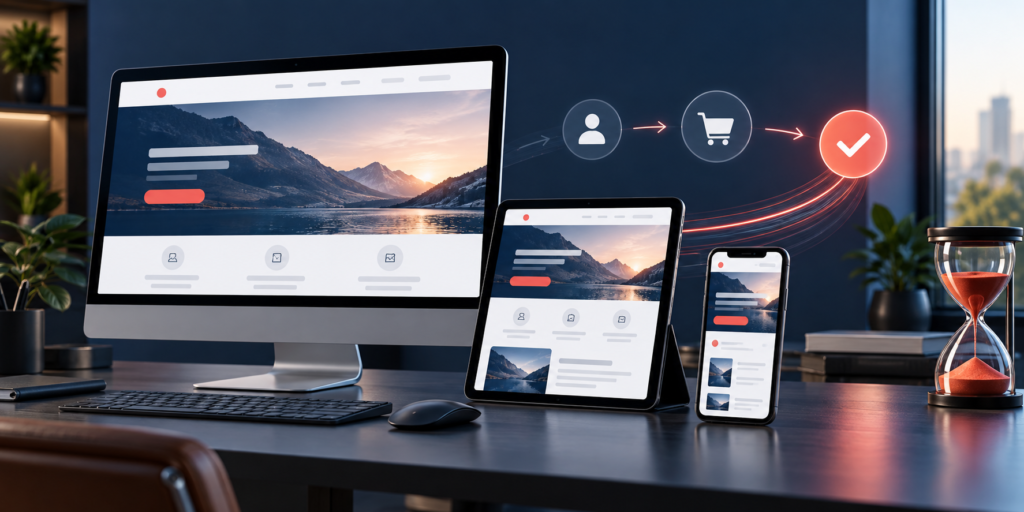
See how speed, responsive design and clear customer journeys work together to support stronger website conversions.
Read Insight
Connect campaign spend with suitable audiences, dependable measurement and meaningful commercial decisions.
Read Insight
Understand the difference between AI-assisted SEO and generative search, what still matters, and how to choose a useful next improvement.
Read InsightEcommerce SEO focuses on product discovery, category pages and the technical requirements of online stores. Its measurement also considers purchases and revenue.
Yes. We prioritise both based on search intent, demand and commercial relevance.
Yes. We review the platform and agree on changes that can be implemented within your store’s setup.
We consider demand, stock availability, business value, existing performance and the effort required. Template-level improvements can also support multiple pages.
We review each situation based on expected availability, customer usefulness and suitable alternatives before recommending an approach.
Yes. SEO and paid campaigns can support different parts of your acquisition strategy. Shared search and conversion insights can inform planning.
For paid search and eligible product campaigns, Google Ads management can complement the store’s organic acquisition plan.
For visual product discovery and suitable remarketing campaigns, Facebook and Instagram advertising offers a separate paid acquisition option.
Yes. Migration support can include URL mapping, redirect planning, technical checks and post-launch monitoring within the agreed scope.
Product description work can be included. The number of pages, depth of content and review responsibilities are defined in your proposal.
The timeline depends on your starting position, competition and implementation speed. We assess your store before setting expectations.
We use available ecommerce analytics and an agreed attribution model to report purchases and revenue associated with organic search.
Costs depend on your catalogue, platform, target markets and deliverables. We provide a customised proposal after reviewing your requirements.